

Ian Botham had already checked out of the hotel. That detail sits in almost every retelling of Headingley 1981, including Matthew Engel’s fortieth-anniversary piece for the Guardian, and it is the right place to begin, because it tells you what the dressing room thought the match was. England had followed on 227 behind. They were still 92 short of making Australia bat again when the seventh second-innings wicket fell. Victory was not a plan. It was not even a rumour. Botham walked out on the Monday afternoon to join Geoff Boycott with the series already tilting away, and with his bags ready for the journey home.
What happened next is the most famous escape in English cricket. Botham made 149 not out. Graham Dilley made 56. Chris Old made 29. Bob Willis took eight for 43. Australia, set 130, were bowled out for 111. England won by 18 runs: only the second time in Test history a side had won after following on. The scorecard is short enough to learn by heart. The match is not. This is the story of five days at Headingley kept by the odds, the selection argument, and the hour in which Willis, bowling from the Kirkstall Lane End, turned a formality into a rout.
It is now more than forty years since. Botham has told it to Wisden. Willis’s life has been written up in the Almanack. Engel has argued that no cricket match was as consequential. The first drafts, though, were written while the nation was still watching: the Guardian on the Tuesday after (“Not since the golden age of cricket…”), Christopher Martin-Jenkins in The Cricketer that September, the Ladbrokes board that flashed 500-1. Those are the voices this piece leans on hardest.
Before a ball: a captain returns, a bowler argues his way in
Botham had resigned the England captaincy after Lord’s, where he had registered his only Test pair. Mike Brearley was persuaded back after an absence of more than a year. Engel’s anniversary piece sets the longer context: thirteen months earlier the selectors had made Botham captain at 24, a “hospital pass” with West Indies next, and his form had collapsed across twelve Tests before he quit and Brearley returned. The weight, Botham later told Wisden, came off: “I was getting burdened, bogged down with the captaincy, and also with what was going on off the field.” His children were being abused at school. “It was quite nice just to ram it back down a lot of people’s throats.” Brearley’s first gift to him, in Botham’s telling, was a question on the outfield: “Are you sure you want to play this game?” Botham said of course he did; they were playing Australia. Brearley replied, Botham says, that he thought Botham would get “10 wickets and a hundred.” He was not far off. Botham’s wider verdict on Brearley, in the same Wisden interview, is the one that explains the rest of the summer: “The biggest thing that Brears brings to you, he knows exactly what to say and when to say it.” He compared him to Spock. “He could look into you like he was reading your mind. You felt like he was probing.” Nowadays, Botham added, they might not even pick Brearley as a batsman. “But do you know what? I’d pick him just for those moments of magic when he produced something, and more often than not, his idea came off.”
Willis nearly missed the match. On 11 July, five days before the start, Alec Bedser rang him at The Oval to say he was being left out. Willis had ended Lord’s with a chest infection and 24 no-balls in Australia’s first innings; at 32, after knee surgery, some of the press thought him spent. He persuaded Bedser he was fit and would prove it in the Sunday League. When the squad was announced, Mike Hendrick was out and Willis was in. Brearley then preferred an all-seam attack at Headingley, leaving out John Emburey. Willis’s first-innings figures of 30–8–72–0 did not, the Wisden Almanack later noted, endorse the judgment. The same Almanack entry places Willis in a longer pain: knee surgery in 1975, winters on the dole, a reputation as a bowler who was a force before lunch and “there for the taking after tea,” in Ian Chappell’s phrase. By 1981 he was taking every game as if it might be the last. “I think just about every game at that stage of his career, with the injuries he’d had, Bob just felt ‘I’ve got to make the most of this’,” Botham told Wisden. “He had a lot of painful nights, after bowling.”
Martin-Jenkins’s September exclusive in The Cricketer fills in the selection timeline from another angle. Willis “was no picked among the 12 players chosen by the selectors on Friday July 20” – the double negative is the archive’s – and had been ruled unfit for Warwickshire the next day. “The selectors checked with Willis himself on Saturday and trusted his verdict that he was fit. He then proved his fitness by playing on Sunday and by having a lengthy net on Monday. Without Willis’ fire and accuracy on the final day, England could not have achieved their great escape.”
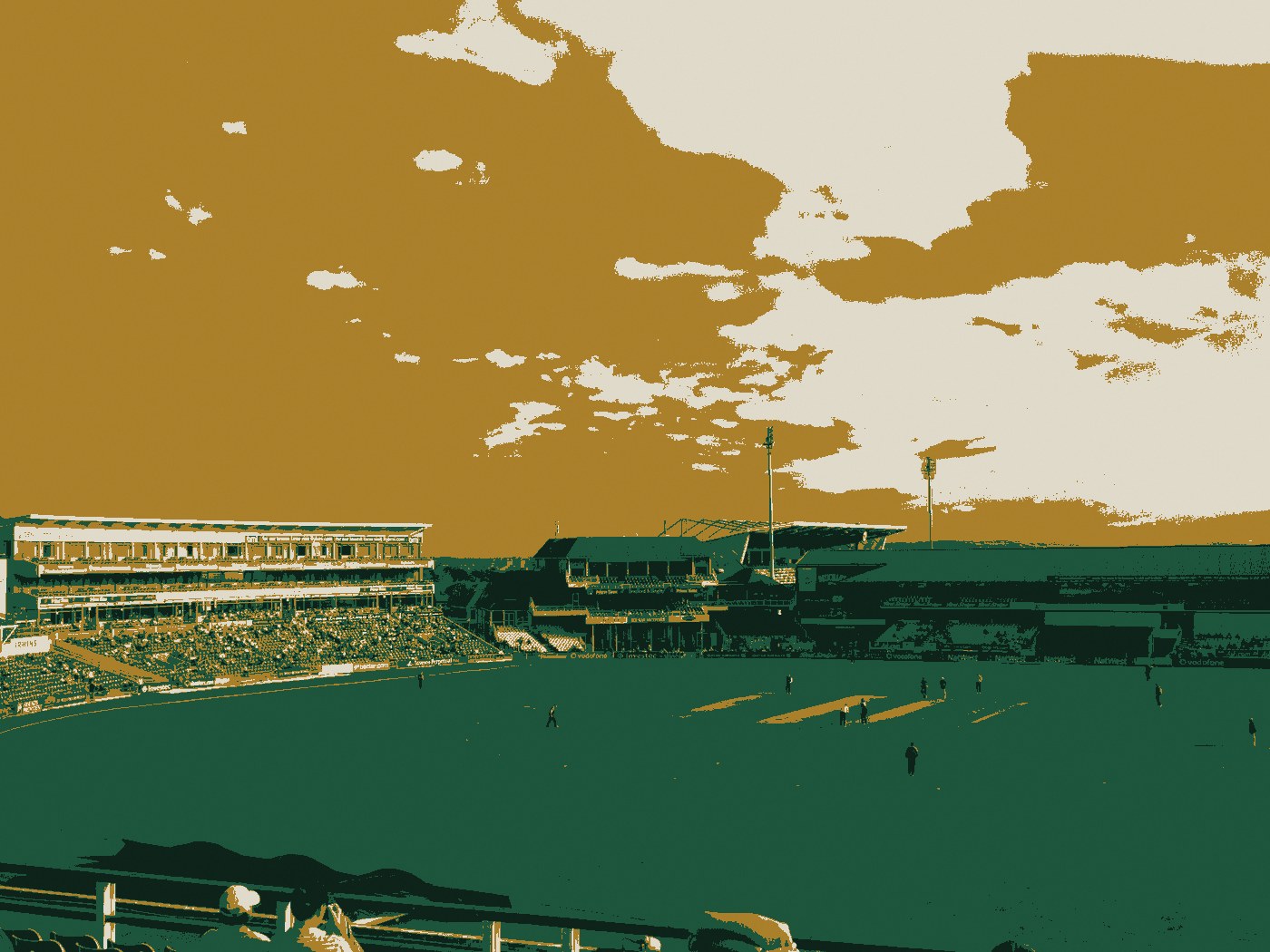
Thursday and Friday: Australia 401 for 9
The match was the third Cornhill Insurance Test of a six-Test Ashes summer, Australia led 1–0 after winning the first Test; Lord’s had been drawn. After Headingley the series was level at 1–1. Umpires: David Evans and Barry Meyer. Man of the Match would be Botham. Australia won the toss and batted. Kim Hughes captained Australia; Brearley captained England. The Cricinfo archive scorecard keeps the days clean. Close of play on Thursday: Australia 203 for 3, Kim Hughes 24 not out, Ray Bright 1. John Dyson made 102 in 294 minutes off 234 balls. Graham Wood fell lbw to Botham for 34; Trevor Chappell was caught behind off Peter Willey for 27; Dilley bowled Dyson. Bright went for 7, also to Dilley. Hughes made 89, Graham Yallop 58, Rod Marsh 28. Botham took six for 95 from 39.2 overs. Willis bowled 30 overs for 72 without a wicket. Old bowled 43 for 91 without one either. Australia declared at 401 for 9 on the Friday, after 155.2 overs.
England’s reply that evening reached only 7 without loss overnight, Gooch 2, Boycott 0. On the Saturday they were routed for 174 in 50.5 overs. Lillee took four for 49, Terry Alderman three for 59, Geoff Lawson three for 32. Botham’s 50 off 54 balls with eight fours was, as the archive round-up put it, “the only resistance offered.” Gooch went lbw to Alderman for 2. Brearley was caught behind for 10. Boycott bowled by Lawson for 12. David Gower caught behind for 24. Mike Gatting lbw to Lillee for 15. Willey bowled by Lawson for 8. Bob Taylor caught behind for 5. Dilley caught and bowled Lillee for 13. Old caught for a duck. Willis 1 not out. Australia enforced the follow-on. The lead was 227.
On a drizzly Monday morning, Engel later wrote, only about 2,000 people arrived “to watch the last rites.” The BBC, in a later classic-Ashes piece, says Brearley’s side “booked out of their hotel on Monday morning in the belief they would be beaten by the end of the day.” Engel has Botham already checked out. Both can be true; both belong to the same mood. The electronic scoreboard, then still a novelty, flashed the Ladbrokes odds: 500-1 against England. Engel called it “a misjudgment worth millions in free publicity.” Two Australians, Dennis Lillee and Rod Marsh, took a small punt on those odds – £15 between them. Engel does not believe they rigged anything. He still calls it “a terrible thing to do.”
Saturday into Monday: the follow-on begins
Close of play on Saturday, day three: England 174 and 6 for 1 in the second innings, Boycott 0, Brearley 4. Gooch had gone first ball of the follow-on, caught by Alderman off Lillee for 0 off three balls. The tourists, the archive piece says, “looked well set to win by an innings and a day to spare.” Lillee’s dismissal of Willey on the Monday took him past Hugh Trumble’s Ashes record of 141 wickets, the BBC notes. At 135 for 7 – Botham still there, Taylor gone for 1, Dilley just arriving – “it looked as if England had lost the Test – and Lillee and Marsh their money.”
Monday: 105 for 5, and then Dilley
The second-innings scorecard is the one people remember in pieces. Gooch 0. Brearley 14. Gower 9. Gatting 1. Willey 33. Boycott 46, lbw Alderman, after 215 minutes. Taylor 1. Then Botham, and the lower order. Botham had come in at 105 for 5. He played quietly for a while with Boycott. Boycott got out, “which was not in the script,” Engel wrote – England 133 for 6. Taylor went at 135 for 7. Dilley came in at No. 9.
Botham’s memory of the conversation is the one Wisden printed: Dilley asked what he should do. “Enjoy yourself. I’m going to!” Botham said. “It wasn’t the greatest wicket, people have to remember this. He had a bit of luck, I had a bit of luck. He played some shots that Graeme Pollock would have been proud of. It was the best knock I’ve ever seen him play.” The Australians kept saying Dilley would nick it. “And he did, yeah, out of the middle of the bat through extra cover more often than not.” The BBC’s later account has the numbers for the stand: Botham and Dilley “added 117 in 80 minutes.” Dilley made 56 off 75 balls with nine fours, bowled by Alderman – his highest Test score. Old then joined Botham and they added 67; Old made 29 off 31 with six fours before Lawson bowled him. Close of play on Monday, day four: England 351 for 9, Botham 145 not out, Willis 1 not out. Overnight they still needed beds. On Tuesday morning Botham and Willis added five more. Willis was caught off Alderman for 2. Botham finished 149 not out off 148 balls, 219 minutes, 27 fours and a six. His hundred, the archive round-up says, came off 87 balls. Alderman finished with six for 135. England were all out for 356. The lead was 129. Australia needed 130 to win.
Martin-Jenkins, writing in The Cricketer that September, put Botham’s innings in one sentence of force: coming in at 105 for 5, still 122 behind, “his brilliance, bravado and, in Kim Hughes’ words, his ‘brute strength’, gave England’s bowlers 129 runs to play with.” Hughes’s phrase is the contemporary Australian captain’s. The rest is Martin-Jenkins watching a match he had not expected to need a second week to explain. Engel’s anniversary version is less polite and more accurate to the mood in the middle: after Boycott left, Dilley arrived and “they both went into ohfuckit mode.” You could simulate the partnership a thousand times, Engel wrote, “and Botham would have been homeward bound every time. But through power, luck and sheer audacity everything came right.”
Botham on Old is in the same register as Dilley. “He was playing well, and I wasn’t going to make him do anything different or tell him to do anything different. The Aussies got stuck into him but he stuck in there. There was a partnership, and it was more time the Australians were in the field, the pitch was not getting any better. Everyone chipped in really with the bat, in the lower order. They were a very formidable bowling attack that the Aussies had.”
Botham’s own sense of the game shifted once England got a hundred ahead. “Once we got to 100 ahead, I said we’re in this all the way. I said, ‘This pitch is not good.’” He also remembered that Australia “didn’t really have a spinner in that game, which might have been a mistake. But then again, why would you, with the pitch doing all sorts?”
Tuesday: the Kirkstall Lane End
Australia began the chase. Botham removed Wood for 10, caught behind, at 13 for 1. Dyson and Chappell took the score to 56. Then Willis, after five fruitless overs up the hill, persuaded Brearley to give him the Kirkstall Lane End, with the wind. “Normally he didn’t like bowling at that end, because of the slope and the problems with no-balls,” Chris Old later told Wisden. The Almanack places the click half an hour before lunch, with Australia “cruising at 48 for one”; Botham and the BBC both remember 56 for 1 as the moment the chase still looked safe. The scorecard’s fall of wickets settles what happened next without settling the exact over of the change: Chappell caught behind off Willis for 8 at 56 for 2; Hughes caught by Botham off Willis for a duck at 58 for 3; Yallop caught by Gatting off Willis for a duck at 58 for 4. Old had Border bowled for 0 at 65 for 5. Willis had Dyson caught behind for 34 at 68 for 6, Marsh caught by Dilley for 4 at 74 for 7, Lawson caught behind for 1 at 75 for 8. Lillee made 17 before Gatting caught him off Willis at 110 for 9. Bright was last, bowled by Willis for 19 – middle stump, yorked – at 111. Figures: Willis 8 for 43 from 15.1 overs, three maidens. Botham 1 for 14. Old 1 for 21. Australia all out in 36.1 overs. England won by 18.
The archive round-up adds a detail Botham also liked: Willis “took his first three wickets in 11 balls.” Australia never recovered. Man of the Match was Botham, for the six for 95, the first-innings fifty, and the 149 not out. Dilley held a catch in the second innings; Taylor took five catches in the Australian second innings alone, including the first three of Willis’s burst. The scorecard’s catch column is as loud as the bowling figures.
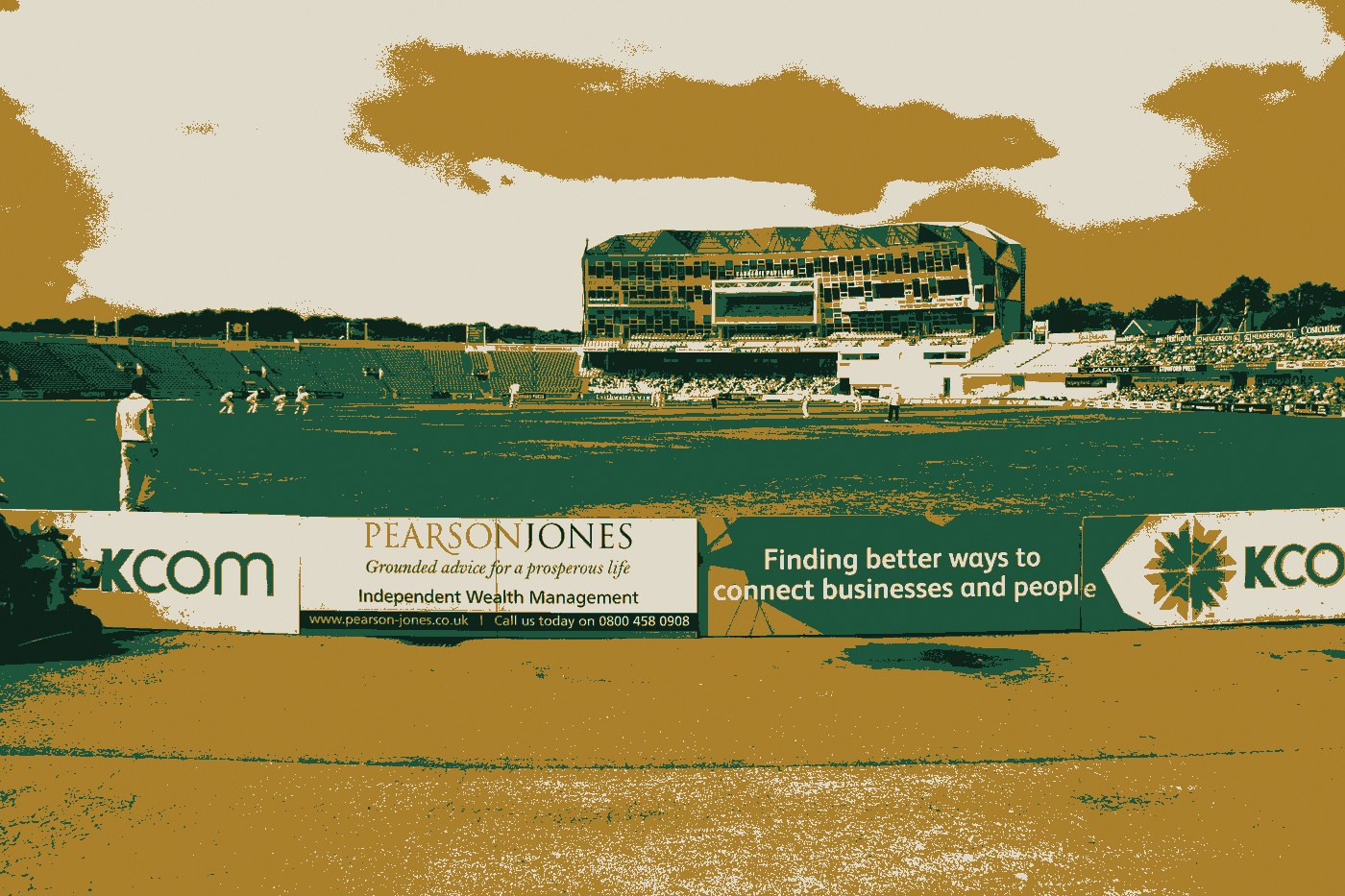
The Monday-night conversation that made the spell possible is in the Almanack. Brearley, Botham and Graham Gooch urged Willis to run in harder, focus on line, forget no-balls. “At that point in his career, he was definitely concerned he had lost some of his potency,” Brearley said. “He wondered if he should cut his pace, and concentrate on accuracy. It was fortunate for him that he had that shit-or-bust spell at Headingley.” Botham’s memory of Willis on the Tuesday is physical: “I’d never seen him as intense as he was that game. I remember he was just staring straight through me, and I thought ‘hang on, I’m your mate, remember?’ He was just tunnel vision.” Willis bowled 14.3 overs off the reel coming down the hill, Botham said, and “didn’t bowl one no-ball in either innings.” The selectors’ doubt had been the no-balls. The match answered them.
Old watched the wickets fall and saw a man who would not be touched. “As the wickets went down, everyone congregated, but he was looking through people. He didn’t want anyone around him – he just wanted to get on with the job.” After bowling Bright, Willis raised his arms, circled, then sprinted for the dressing-room through the crowd. In a television interview with Peter West he went at the press: “The standard of journalism in this country has gone down the nick completely.” He later called that “foolish, petulant, immature.” The meaning of the day, the Almanack says, sank in only on the exhausted drive back down the M1, when the radio led on the cricket. Willis’s own later line on the Bright dismissal is the one that stuck: “The sight of Ray Bright’s middle stump going over will probably be the last memory I take to my grave.”
What the dressing rooms did
England’s mood, Engel wrote, stayed oddly sour even in victory. They were livid with the press for writing them off, “as if they had not done the same themselves.” Botham’s version of the evening is more comic and more pointed. The dressing-room attendant was a fourteen-year-old South African boy called Ricky Roberts. There was no champagne in the England rooms because the Australians had it in their bath, expecting to celebrate. Botham sent Roberts across to ask for it. “All I could see was Ray Bright and Rod Marsh as he came flying back through the door!” Botham told Wisden. “He’s forgiven me now I think.” The champagne story is Botham’s; treat it as such. The anger at the press is in Willis’s interview and in Botham’s towel-over-the-head walk past the reporters: “You wrote what you wanted last week, so keep on writing.”
The Guardian’s contemporary report, published the day after, reached for the deepest available comparison. “Not since the golden age of cricket have England won a test to compare with the one they won by 18 runs against Australia at Headingley yesterday.” Not since A. E. Stoddart’s side won after following on at Sydney in 1894, the paper wrote, had an English public been given quite so much cause for celebration. The third Cornhill Test would be remembered for Botham and for Willis, “but perhaps the thing that will give it an imperishable place in cricket history alongside the tied Test of Brisbane 1960 was the utter improbability of the victory.” England, the Guardian reminded its readers, had scored 174 to Australia’s 401 for 9 declared, “and at one stage on Monday they were still 92 runs short of making Australia bat again with only three second innings wickets standing.” The man who “did most to fling logic the full” length of the paragraph was Botham; the paper’s Tuesday morning edition was already treating the match as history.
There is a small disagreement in the retellings about how many people were there for the last rites. Engel has “only 2,000” on the drizzly Monday. The atmosphere on the Tuesday, once Willis was through the top order, is never described as quiet. The nation, Engel insists, was watching from elsewhere – including from the Lord’s press box, where the young deputy cricket correspondent kept one eye on Middlesex and Worcestershire and one eye on the television. “We remember the most dramatic events through the prism of where we were when we heard the news.”
The odds, the bet, the board
The 500-1 is the detail that escaped the sports pages. Ladbrokes put it on the board while England were following on. Engel treats the Australian players’ £15 punt as a moral stain rather than a conspiracy: “I do not believe they rigged the result. But it was a terrible thing to do.” The BBC’s later classic piece puts the same bet next to the Monday hotel checkout, as twin signs that the match was over in everyone’s head. Botham’s 149 not out and Willis’s eight for 43 did not just beat Australia. They beat a price that had already been printed.
That is why the checked-out bags matter as much as the yorker. Headingley 1981 is not a story about a side that secretly believed. It is a story about a side that had stopped believing and then, through a sequence nobody would design, found itself needing hotel beds again on the Monday night and a target to defend on the Tuesday. The follow-on was supposed to end the match. It extended it. The odds were supposed to be colour. They became the match’s most famous prop.
After Headingley
The series was level at 1–1. England went to Edgbaston and Botham took five for 1 as Australia collapsed. They went to Old Trafford and he made a hundred Engel thought “technically far superior to Headingley.” They regained the Ashes. Botham was the story of the summer and, Engel argues, of the decade that followed – front-page copy, bans, comebacks, Gooch asking who wrote his scripts when he took the wickets that equalled and passed Lillee’s world record in 1986. Headingley did not invent Botham. It released him. It also, Engel suggests, taught English cricket a dangerous lesson about magic.
Willis’s path was quieter and shorter. He finished with 325 Test wickets. The Almanack’s memorial essay ends where this match ends in his own head: Bright’s stump. For the public, Headingley ’81 became the shorthand for his career in a way no other spell managed. When he died in 2019, the Mail gave him six pages. The match had long since left the sports pages and entered the national memory.
One more disagreement belongs on the page. Botham remembers Brearley predicting “10 wickets and a hundred”; his own match return was six wickets and a fifty in the first innings, then 149 not out in the second – not ten wickets, but close enough that he still tells the story with a grin. Willis’s first-innings none for 72 sits beside his second-innings eight for 43 as the cleanest before-and-after in the scorebook. The Almanack and Botham agree on the Monday-night talk; they disagree slightly with the BBC and with each other about whether Australia were 48 for 1 or 56 for 1 when Willis changed ends. The fall of wickets makes the sequence plain either way. The match does not need the exact over number to be true.
Why Headingley mattered
The facts grid below is the match in five squares. Everything else in this piece is argument about what those five squares cannot hold on their own.
The BBC’s classic-Ashes framing is the series one: Headingley “signalled an about turn in the series which England went on to win 3–1.” Single Tests are often named after players; “the 1981 series has gone down in history as ‘Botham’s Ashes’.” Botham was Player of the Match in each of the three Tests England won. Headingley was the hinge.
Engel’s claim for the match is not that it was the greatest Test ever played. “Intrinsically, no. Most of the game was routine and deeply depressing for England.” His claim is consequence. Botham, freed of the captaincy, ascended through the rest of the series: five for one at Edgbaston, a superior hundred at Old Trafford, the Ashes regained. Cricket became hot through the 1980s while English football was in eclipse. Some of those consequences, Engel adds, “were arguably bad for the winning side” – a belief in Bothamesque magic that was no substitute for practice and fitness. The match made a decade as well as a myth.
Martin-Jenkins’s contemporary judgment was simpler and closer to the grass. Botham had been “magically transformed in his first match away from a captaincy which had weighed more heavily than Frodo’s ring,” and had “stolen the Third Test from Australia in two hours of thunderous driving.” Willis took eight of the last nine wickets. Gatting and Dilley held catches. “The daylight robbery was completed amidst national rejoicing.” The exclusive Martin-Jenkins carried that month – that Willis had not been in the original twelve, and had talked his way back in – is part of the same story. Without that phone call to Bedser, the Kirkstall Lane End spell does not happen.
What I keep coming back to is the checked-out hotel and the 500-1 board. Headingley 1981 is a match that begins in the language of endings and ends in the language of miracles, and the honest accounts refuse to pretend anyone saw the second from the first. Botham was playing shots. Dilley was enjoying himself. Willis was staring through his own team-mates. Australia needed 130 and were 56 for 1. Then the clock did something the odds had not priced in. The scorecard keeps 149 not out and eight for 43. The clock keeps the hour from the change of ends to Bright’s middle stump, and the evening in which a fourteen-year-old was sent to borrow the other side’s champagne.